
Ingrown Toenail
Relieve Discomfort, Restore Comfort: Expert Care For Ingrown Toenails To Reduce Pain, Prevent Infection, And Help You Walk with Confidence Again.
Ingrown Toenail
What is an ingrown toenail?
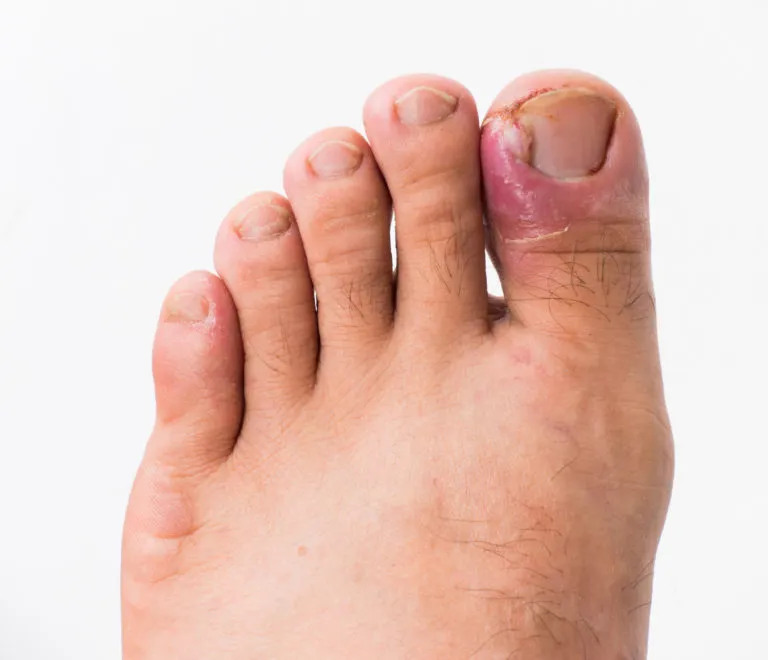
An ingrown toenail develops when the sides of the nail grow into the surrounding skin. This causes the skin to become red, swollen and tender, and in severe cases it can cause pus and bleeding. An ingrown toenail may become infected without treatment and antibiotics may be required. Ingrown toenails most commonly affect the big toenail, but can affect the other toes too.
How we can help
You should see a podiatrist urgently if you have symptoms of infection, and also have diabetes, poor circulation or a reduced immune system. You should also visit a podiatrist if you experience any persistent pain in your toe from the ingrown nail or have a condition that affects the nerves and/or feeling in your foot.
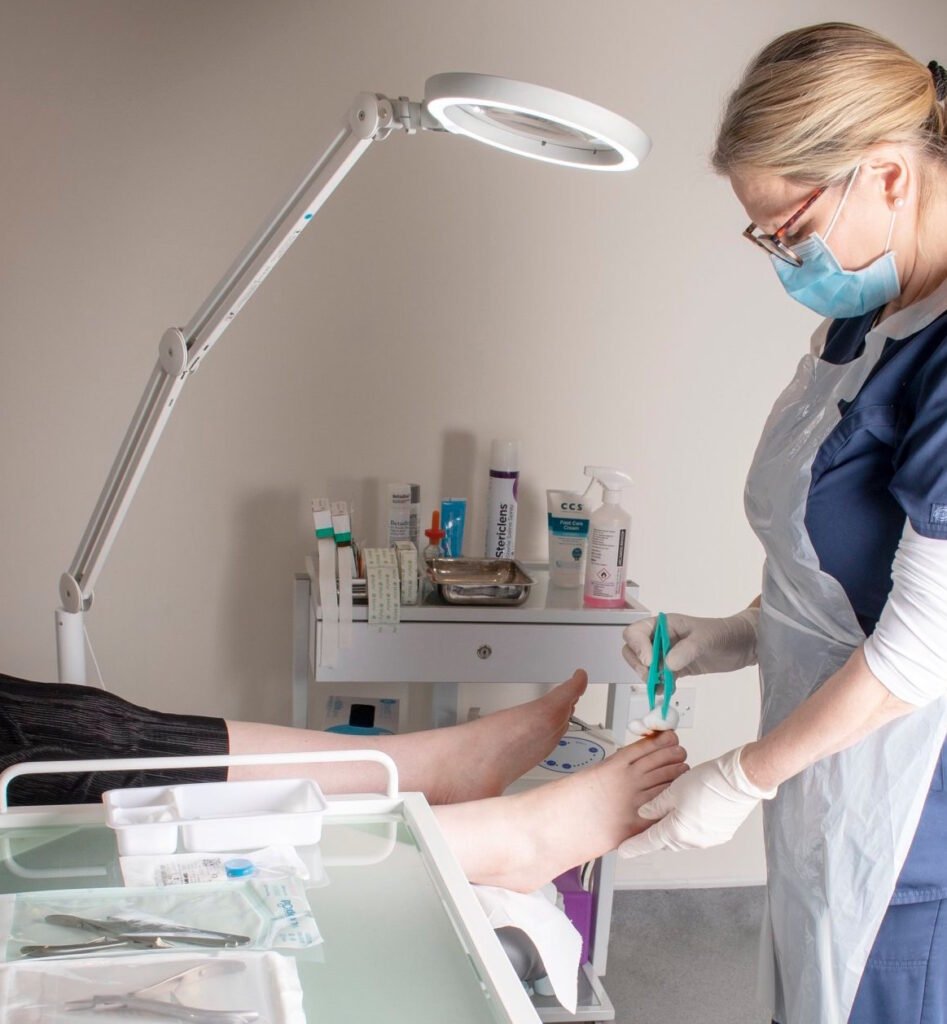
Nail surgery is recommended if the problem reoccurs. Depending on the severity of symptoms this may involve either a partial nail avulsion (PNA), where the nail edge (or edges) is/are removed, or a total nail avulsion (TNA), where the whole nail is removed.
Causes of an ingrown toenail
Heredity – in many people, the tendency for ingrown nails in inherited
Trauma – sometimes an ingrown toenail is the result of a trauma to the nail, such as stubbing your toe, having an object fall on your toe or taking part in activities that involve repeated pressure on the toes, such as kicking or running.
Improper trimming – the most common cause of ingrown toenails is cutting your nails too short. This encourages the skin next to the nail to grow over the nail
Incorrect sized footwear – ingrown toenails can result from wearing socks and shoes that are tight or short pushing your toe flesh onto the nail so that it pierces the skin
Genetic factors – there are many genetic factors that can make you prone to ingrown toenails, including your posture (the way you stand), your gait (the way you walk) and any foot deformity such as a bunion, hammer toes or excessive pronation of the feet (when your foot rolls inward excessively). Your nails may also have a natural tendency to splay or curl out instead of growing straight, encouraging your nail to grow outwards or inwards into the flesh
How to prevent an ingrown toenail
Cut your nails straight across the nail, don’t curve your nails to the shape of the front of your toe
Do not cut them too short. trim toenails so they are even with the tips of your toes. If you trim them too short, the pressure from your shoes on your toes may force the nail to grow into the tissue
Wear shoes that fit properly. shoes that put too much pressure on your toes or pinch them, may cause a nail to grow into surrounding tissue. If you have nerve damage to the feet, you may not be able to tell if your shoes fit too tightly
Wear protective footwear. if your activities put you at risk of is, wear protective footwear. such as steel-toed shoes
Check your feet. if you have diabetes, check your feet daily for sign of ingrown toenails or other foot problems.
Patient Testimonials
Loved by our Patients
EXCELLENTTrustindex verifies that the original source of the review is Google. Excellent care and support by all staff at Warley Grange. If Carlsberg did Chiropody 👍Posted onTrustindex verifies that the original source of the review is Google. Absolutely excellent service throughout at this superb practice. Staff were helpful, understanding and professional at all times. I wouldn’t hesitate to recommend them highly.Posted onTrustindex verifies that the original source of the review is Google. My 15 yo daughter just had her second surgical procedure on her toe with Richard and he was fantastic! Made her feel at ease with little jokes, very understanding and patient with her being worried about it all. I would highly recommend!Posted onTrustindex verifies that the original source of the review is Google. All my family now visit Warley Grange because of the first class service from the whole team. It’s lovely to been treated with the upmost care & professionalism and we are always made to feel welcomed and are shown care & kindness. I have been to many podiatrist’s in the past and would not go anywhere else now. I travel a long way as it’s important to me to look after my feet and I couldn’t go anywhere better. We feel so lucky to have somewhere to go where we know we will always come away feeling that any foot issues have been expertly handled. On top of their first class service it’s such a lovely private clinic and I always look forward to my regular visits. Thanks everyone so much.Posted onTrustindex verifies that the original source of the review is Google. I would highly recommend Warley Grange Health. It is a friendly, clean and professional clinic nestled in a superbly peaceful area. Emily explained everything to me and made me feel comfortable immediately. My feet look and feel amazing and I look forward to my next appointment.Posted onTrustindex verifies that the original source of the review is Google. Nice little place. Friendly staff.Posted onTrustindex verifies that the original source of the review is Google. Absolutely brilliant service As soon as I stepped in, I felt at ease, everything was explained in a manner I could understand, no fussing just quality service. Aftercare was so good, I have nothing negative to say, I would highly recommend. Thank you so much for giving me a pain free future.